This website documents my past and present astronautical art projects. Although my space program is being developed in a virtual environment the actual space projects are real. My video blog can be found on the Greater.Earth website.
My involvement with space activities began over fifty-five years ago when I had the fortunate experience to personally witness the beginnings of the U.S. space program while living in the immediate vicinity of Cape Canaveral and the Kennedy Space Center (1959 -1970). There I held summer jobs at the space center in 1967 & 1968 during the Apollo program.
As a professional artist, I have pursued two parallel art careers: as a TerraArtist, I developed an extensive oeuvre of hyper-realistic nature paintings. As an AstroArtist, I am an early and active practitioner in the field of the astronautical arts by having initiated and realized a number of art-in-space projects beginning in 1985 with the Orbiting Unification Ring Satellite (O.U.R.S.) project and the Cosmic Dancer (1993) and Ars Ad Astra (1995) art interventions that were sent to the Mir space station. Information about these and other art interventions can be found below and throughout this website.
My work has been exhibited in a number of international space and art exhibitions including Space Commerce, Montreux (1986, 1988, 1990) Art Basel in (1987, 1988, 1989), the International Astronautical Congress (1995, 1997, 1998) All Design - Leben im schwerelosen Raum, Museum für Gestaltung, Zürich (2002), Abenteuer Raumfahrt. Aufbruch ins Weltall, Landes Baden-Württemberg im Landesmuseum für Technik und Arbeit in Mannheim (2006) Falling Without Fear, The Harwood Museum of Art, Taos, New Mexico (2012-13), Free Enterprise: The Art of Citizen Space Exploration, California Museum of Photography, UCR-University of California Riverside (2013), The Universe and Art, ArtScience Museum, Singapore (2017), Personal Structures - Open Borders exhibition curated by the Global Art Affairs Foundation in the context of the 2017 Venice Art Biennale . Cosmic Dancer will be included in the upcoming Fly me to the Moon exhibition at Kunsthuas Zürich ( April - June, 2019). See also my list of exhibitions.
I am co-author with Dr. Marco C. Bernasconi of The Space Option: thespaceoption.com who has also collaborated in the development of these projects.
I am a member International Academy of Astronautics, Editorial Advisor to the journal Leonardo and a member of the Lifeboat Foundation Advisory Board.

Press Releases
The primary purpose of Astrostrom is to introduce, promote and expand an economic, technological and cultural dimension to the astronautical endeavors of mankind, with a focus on the harvesting of energy from space. Astrostrom may engage in any business suitable to further the purposes of the corporation.
ASTROSTROM GMBH
Talacker 12
8259 Kaltenbach
Switzerland
Firm Number UID: CHE-107.353.894

Astrostrom GmbH has been given a contract from the European Space Agency (ESA) to study space solar power from the Moon. The Greater Earth Lunar Power Station (GE⊕-LPS) is a habitable space station in lunar orbit that is designed to provide solar energy for lunar operations. Energy from space and space tourism could become synergistic economic drivers for future space development.
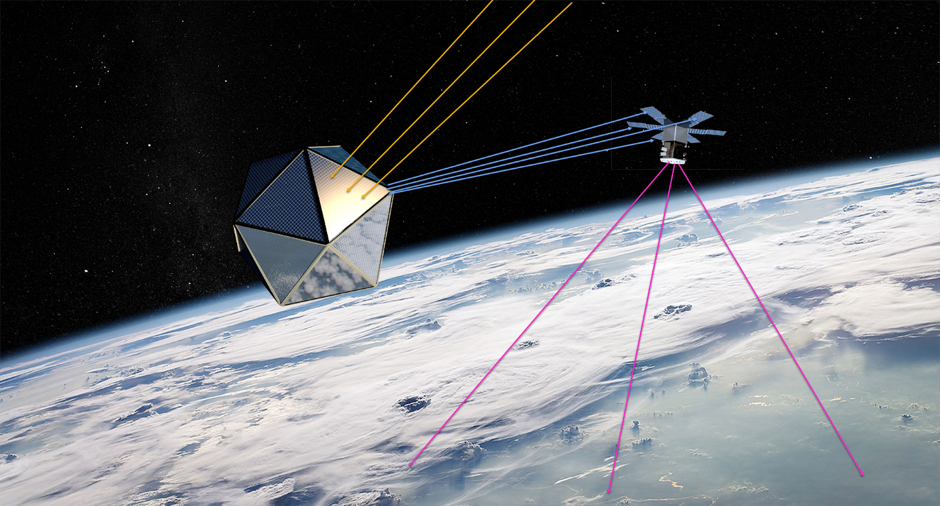
Space Option Star was one of several ideas selected from the 201 submissions and included in a ‘Space Resources and Infrastructure’ group for further development as a potential future ESA mission. The proposed S⊕S is an icosahedron covered with solar panels with a diameter of approximately 100 meters. If realized, the S⊕S would be the largest physical object ever sent into space and visible to a large part of the world's population.
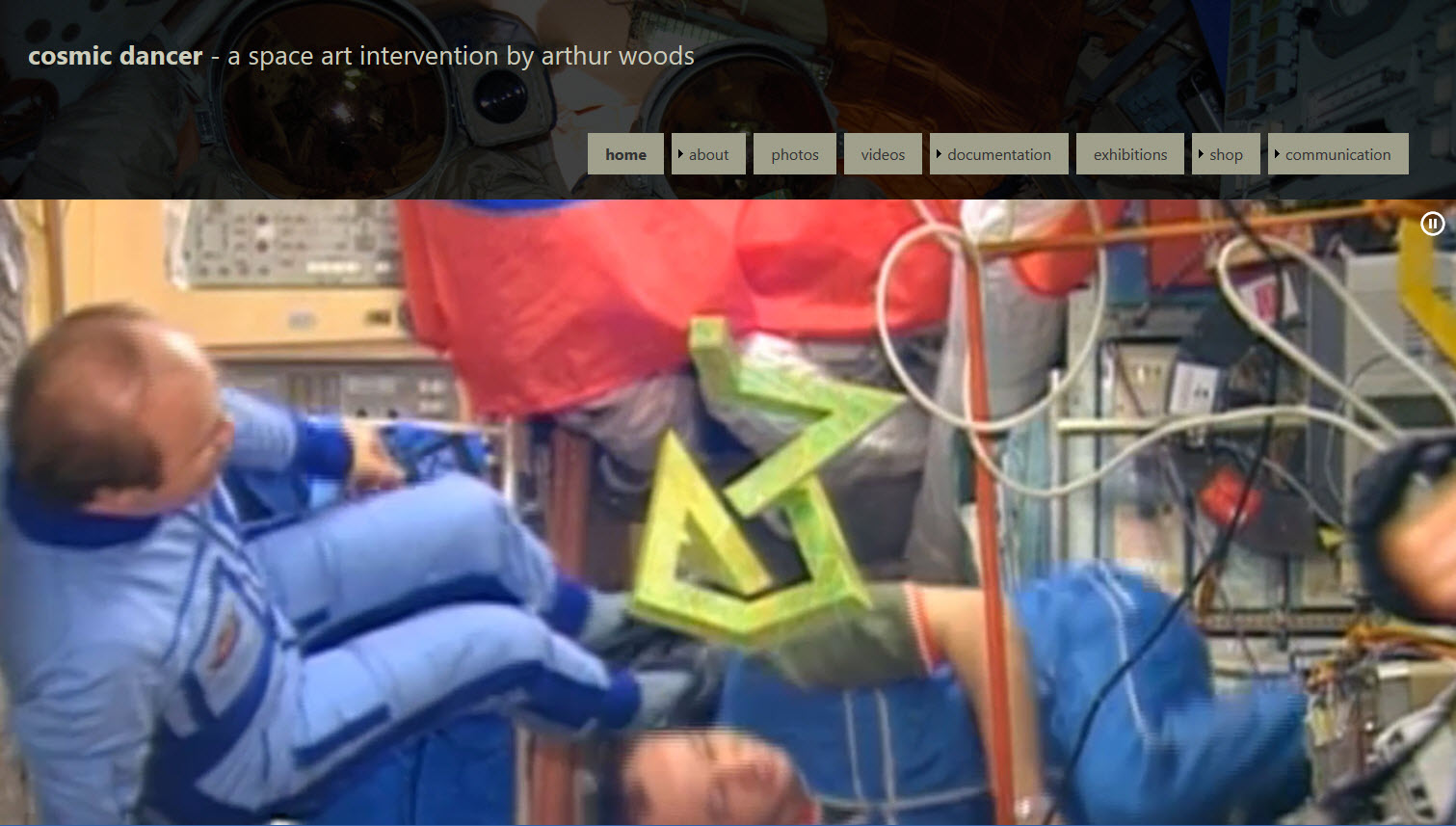
On May 22, 1993, a sculpture called the Cosmic Dancer was launched to the Russian Mir space station on a Progress rocket from the Baikonur Cosmodrome in Kazakhstan.
The Cosmic Dancer - a painted geometric form made out of welded aluminum tubing measuring approximately 35 x 35 x 40 centimeters and weighing exactly one kilogram - was the first three-dimensional artwork to be specifically conceived for and officially realized in a space habitat. The purpose of the project was to investigate the properties of sculpture in weightlessness and to evaluate the integration of art into the human space program.
After its arrival on the Mir space station the Cosmic Dancer was allowed to slowly spin and freely float in the weightless environment. Freed from the force of gravity which causes any sculpture on Earth to rest or be positioned in a certain way, the sculpture could be viewed from any perspective and angle. The cosmonaut crew interacted with the sculpture and evaluated the contribution and importance of having it included in their environment. They provided a photographic and a video documentation of this experience.
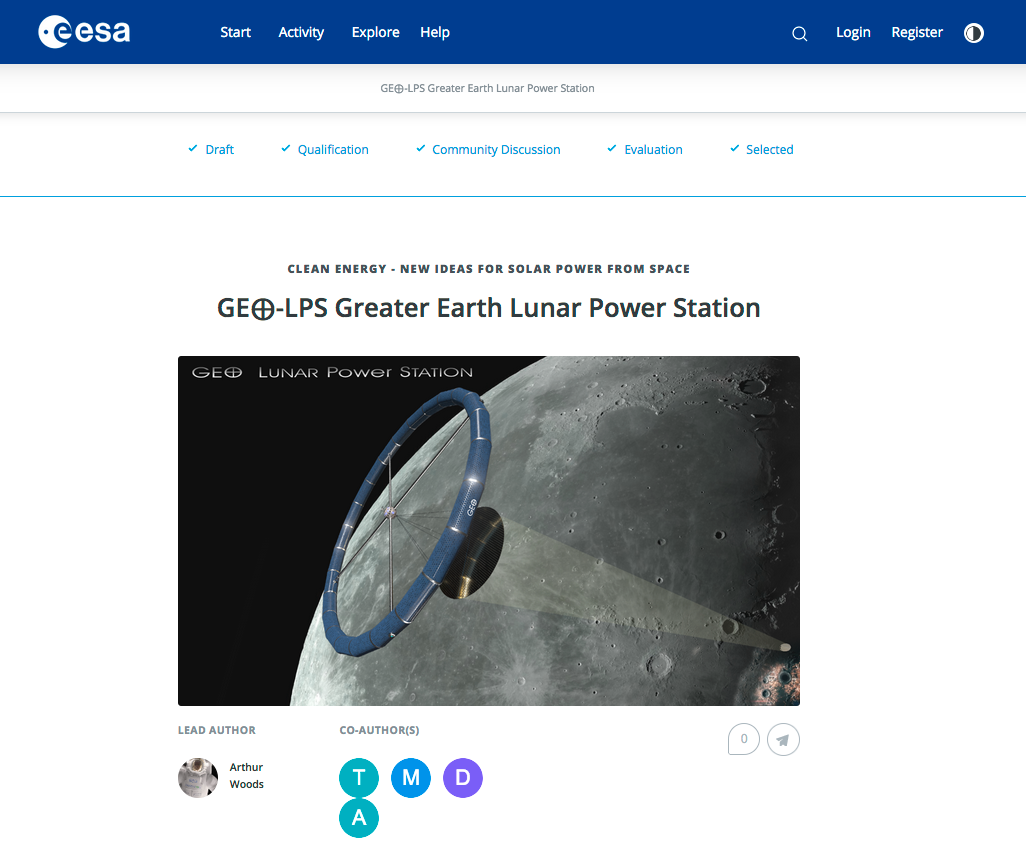
The biggest obstacle to realizing clean energy from space is the logistical challenge of launching many, many rockets from the surface Earth to deploy power satellites that are several kilometers in diameter. One solution is to manufacture the solar power satellites on the Moon from lunar materials. Manufacturing solar power satellite components on the Moon would effectively eliminate both the launch obstacle and the costs of manufacturing future Astrostrom power stations. This is the goal of the ESA study contract awarded to Astrostrom GmbH called "The Greater Earth Lunar Power Station". The study will last one year and the team includes space engineers, architects and economists.

Ars Ad Astra - the 1st Art Exhibition in Earth Orbit - was organized by the Swiss based OURS Foundation in a cooperation with the European Space Agency (ESA). After holding an international competition based on the theme “Space and Humanity”, twenty original art works were selected by a jury of art and space experts for an exhibition on the Mir space station during the ESA Euromir’95 mission. In addition, one artwork from each artist participating in the project was digitized and installed on a portable computer that accompanied German cosmonaut Thomas Reiter. The artists were challenged to make "space qualified" artworks that were lightweight and used no toxic materials. Each artwork was carried out on paper that measured 21 x 30 cm.
Ars Ad Astra was launched to the Mir space station on October 10, 1995. Once there, the cosmonaut crew consisting of Thomas Reiter and his two Russian colleagues Sergeij Avdeev and Yuri Gidzenko picked the artwork they liked best from the twenty originals. This artwork, a watercolor by the American artist Elizabeth Caroll Smith called When Dreams are Born was kept on the Mir station. After being in space for 179 days, the remaining 19 artworks were returned to Earth on February 29, 1996.
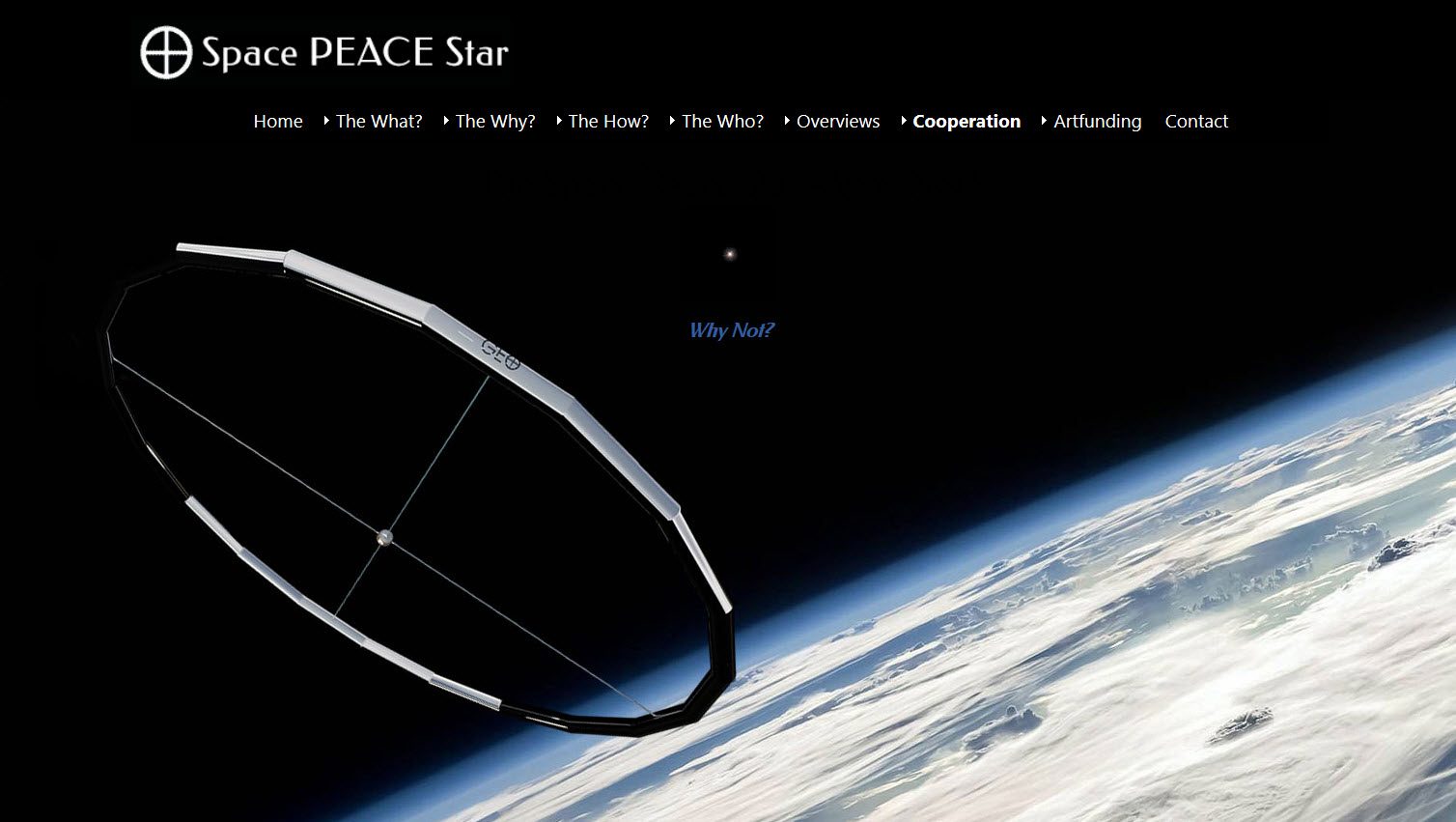
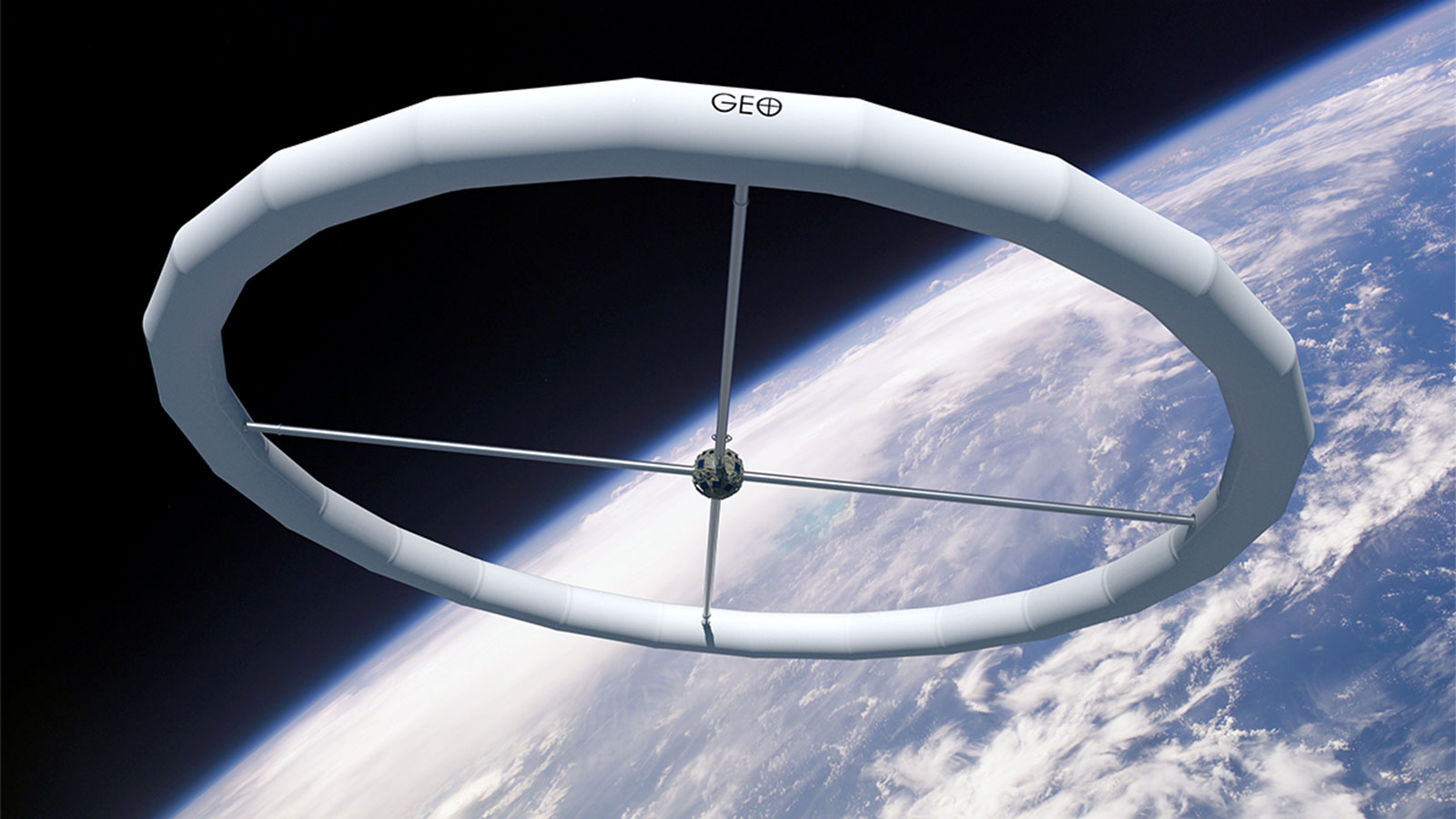
An inflatable toroidal sculpture in the shape of Earth’s astronomical symbol - which promotes the idea that space is a viable alternative to war and is actually a re-manifestation of my earlier O.U.R.S projects.

The EarethSeeds art intervention is designed to locate the seeds of Earth off the home planet in order to insure that selected forms of life from Earth will be preserved and that life from Earth will have the chance to survive elsewhere if the conditions for life on Earth become inhospitable.

An inflatable icosahedron with a diameter of 100 m and covered with solar panels - which promotes the idea that solar energy harvested in space can solve humanity’s reliance on fossil fuels and addresses the CO2/Climate Change issue.

An art intervention that plans to place naturally formed but artistically decorated artifacts on the space station, the Moon and eventually on Mars if possible. Its message is that a "Space Age" is preferable to a "Stone Age".

The GEO-Political Observatory (GEO-PO) is an ART(Official) Earth observation satellite that focuses on the geopolitical events and developments that are affecting the state of civilization and the well-being of the citizens of Earth.
Launched in October, 2016, the GEO-PO is being used to gather data that will add transparency and insight to these operations and will contribute to a comprehensive analysis of the current geopolitical situation while making this information available to the citizens of planet Earth via the Internet.
The GEO-PO is supplying a steady stream of information that is precisely focused on these issues. As geopolitical developments emerge or change the software on-board the satellite can be modified to refine its focus on specific targets of interests. The GEO-PO is a counter-point to the many surveillance devices - including those located in space - that have been deployed to track and control the average citizen on Earth.
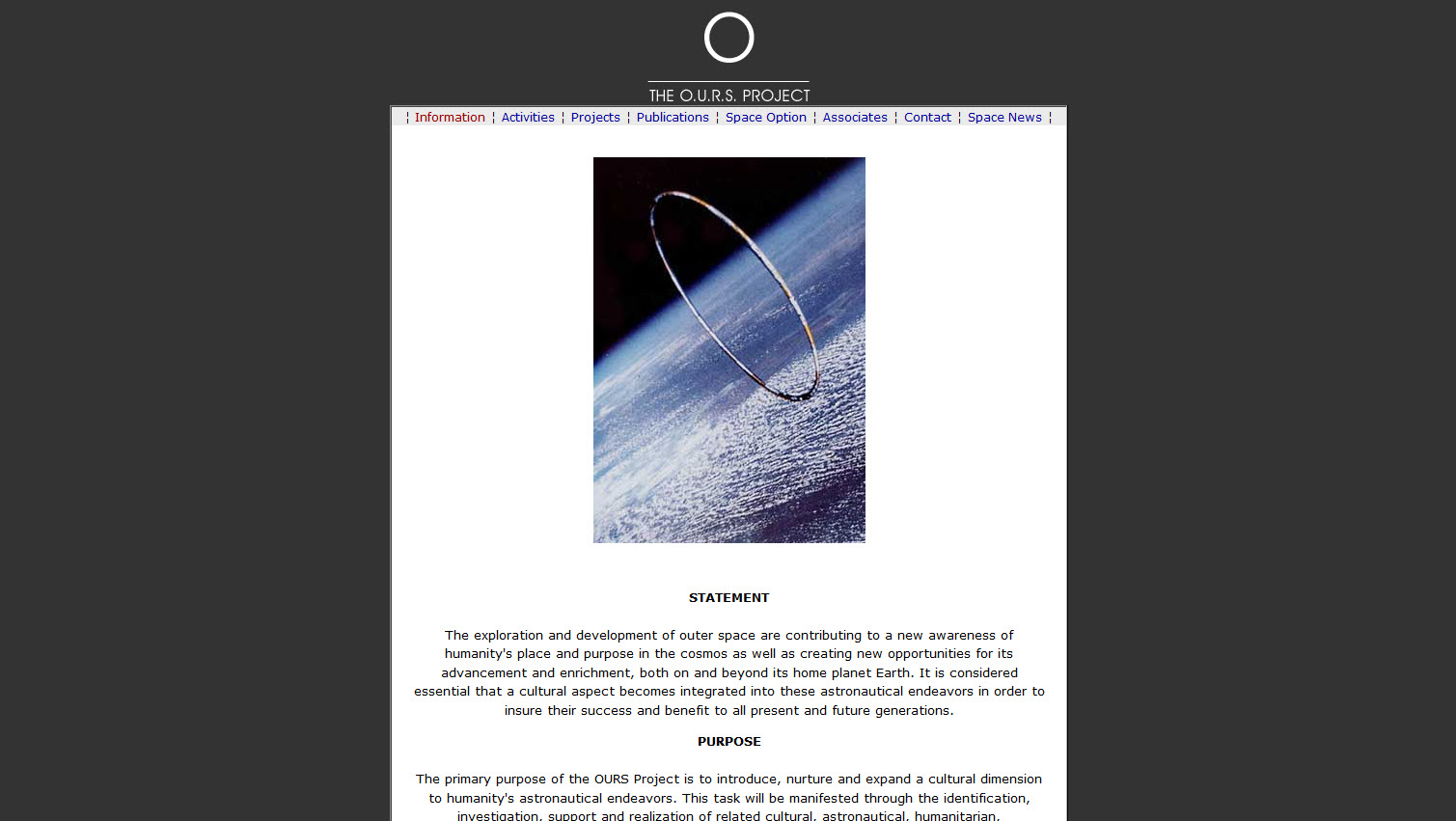
The primary purpose of the OURS Project is to introduce, nurture and expand a cultural dimension to humanity's astronautical endeavors. This task will be manifested through the identification, investigation, support and realization of related cultural, astronautical, humanitarian, environmental and educational activities which may take place both on and off planet Earth, and which are deemed as beneficial to the development and advancement of human civilization in this new environment.
In the 20th century humans began to investigate ways to penetrate the atmosphere. Today a communications apparatus installed beyond the atmosphere permits us to remain in constant touch with each other from any place on the planet. Orbital outposts are providing the information to enable human beings to adapt to this new environment. Scientific instruments placed in this area are exploring the depths of the cosmos and investigating the state of the environment on the planet below. National security systems have placed monitoring devices that track developments and movements of opponents making surprise attacks less likely. Indeed, the functioning of contemporary society is totally dependent on these technological resources orbiting the Earth and without them modern civilization would no longer function.
These activities have effectively expanded the territory of planet Earth from its solid dimensions of 12,756 kilometers to a diameter of approximately 84,328 kilometers. As the 21st century unfolds, humanity finds that it needs more room and more resources to sustain its numbers and to maintain its thirst for further development. The finite planetary resources that contributed to its present state are being irrevocably exhausted to unsustainable levels and their uncontrolled use within the biosphere is resulting in severe ecological consequences. As it is unequipped to occupy and transform a neighboring planet to meet its growing needs, humanity's next logical step will be to discover and inhabit the last reaches of its own planet - to expand its activities to Earth's true boundaries as defined by the laws of physics.
Greater Earth is an “art intervention” which exposes a new perception of our planet that is based on Earth's true cosmic dimensions as defined by the laws of physics. It is also a virtual environment and video blog where I am creating my own personal space program complete with rocket launchers, satellites and a space station where I will reside as the “resident artist”.
From this space station vantage point, I am broadcasting regular commentaries, interviews and observations about events on Earth as seen and interpreted from the perspective of Earth orbit. Sophisticated computer generated video animations are combined with my intimate knowledge about space and how space activities can significantly contribute to addressing the many environmental, political and economic issues and challenges that civilization currently faces.
In the context of the Greater Earth art intervention a number of additional "art interventions" are currently being developed as global collaborative projects. These can be found on the Greater.Earth website and on their dedicated websites.


arthur woods © 2008-2024 ars astronautica